
Loading
Free delivery across India✦ Ready to dispatch in 3 working days
Materials and making
Artlas makes layered wooden world maps, cut to the precision of 0.01 mm and finished by hand.
Artlas began with a simple frustration: every world map on the market was printed on paper, flattened behind glass, and hung like a poster.
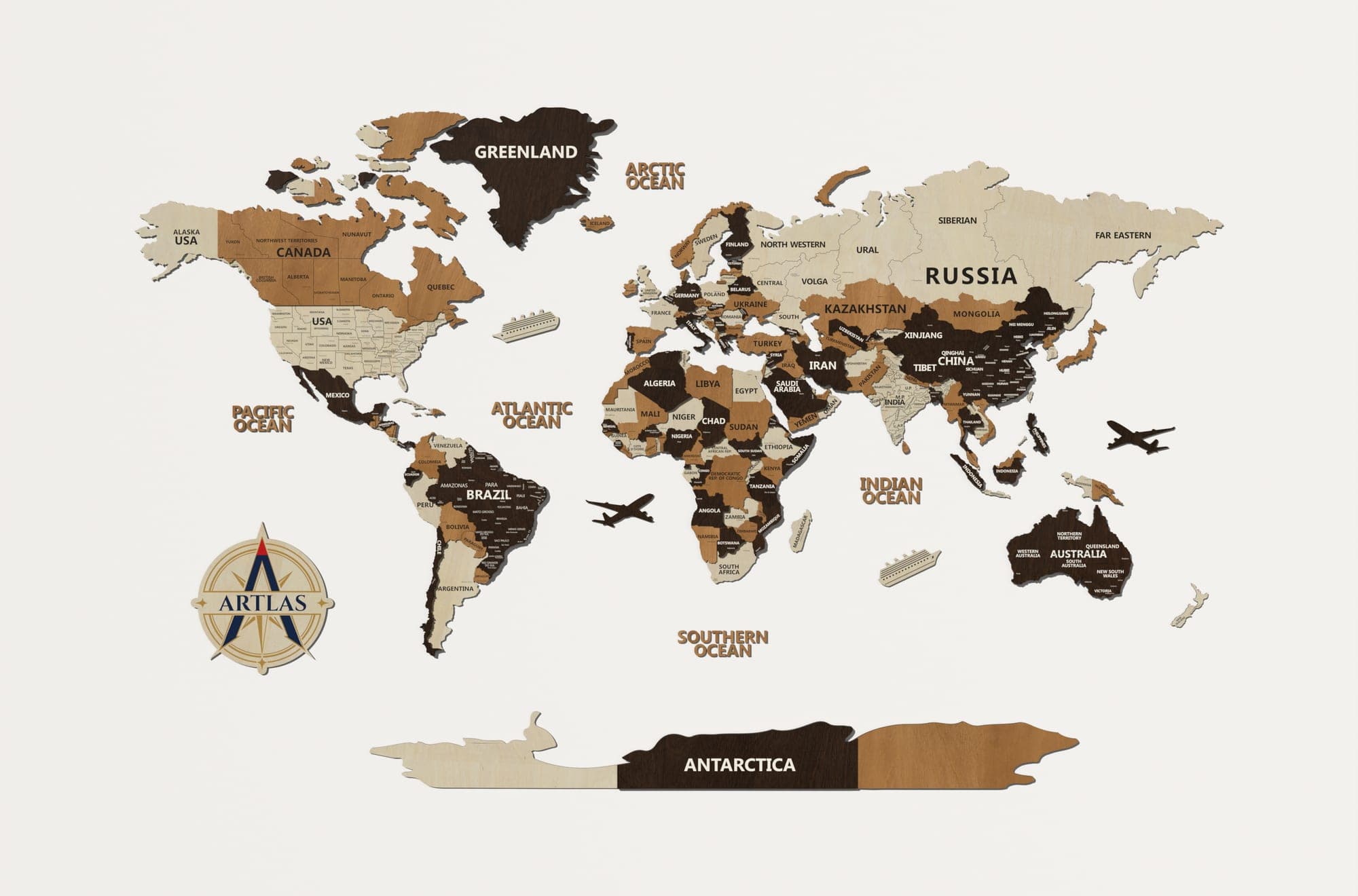
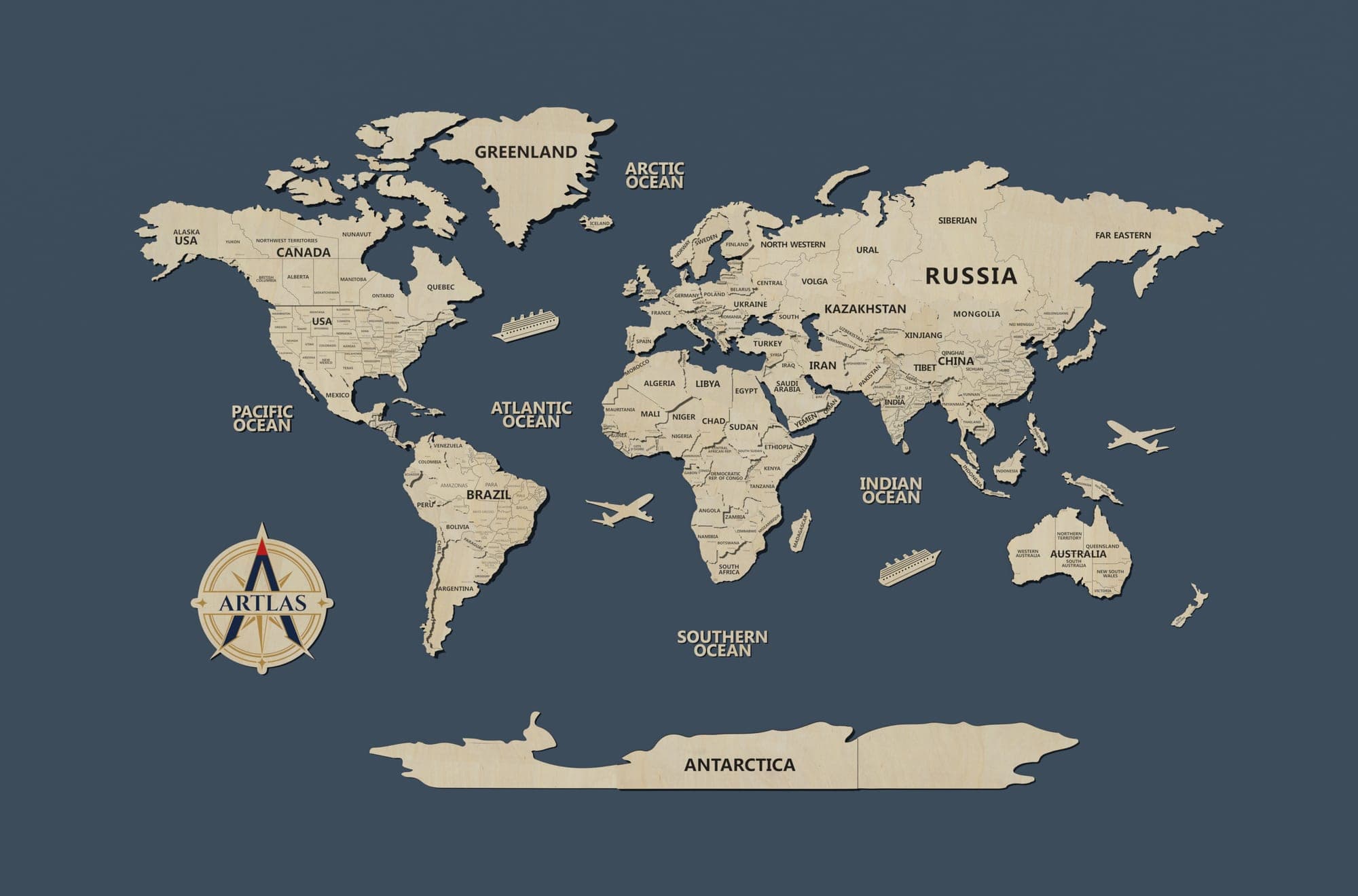
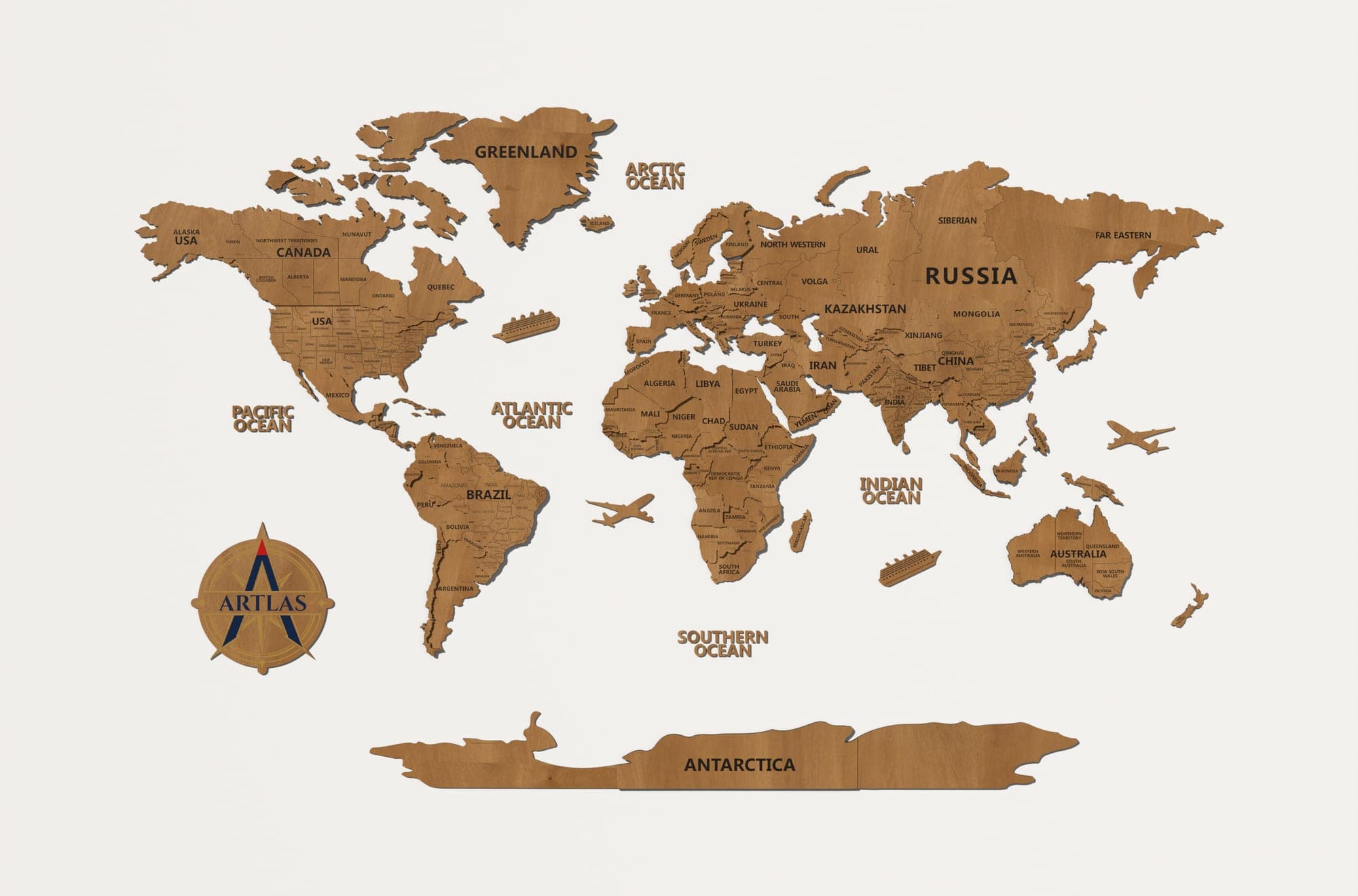
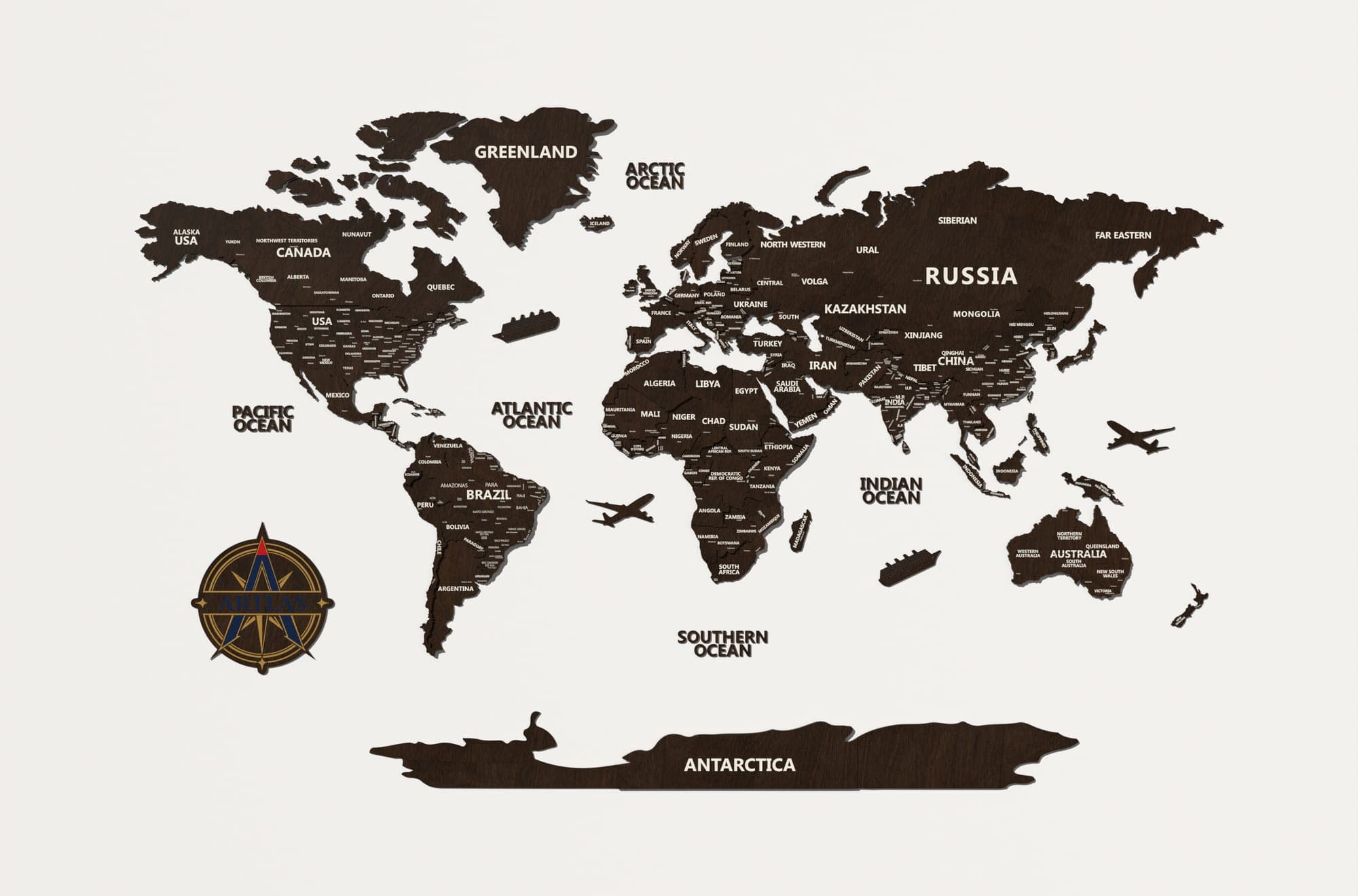
A map of the world deserves better than that. So we started cutting them out of real wood — birch, teak and walnut — at three different depths, so the continents cast shadow on each other and the map changes through the day as the light moves across it.
Birch at 4 mm, teak at 8 mm, walnut at 12 mm. Birch plywood costs us several times what MDF costs, and we use it because it stays flat on a wall through an Indian monsoon.
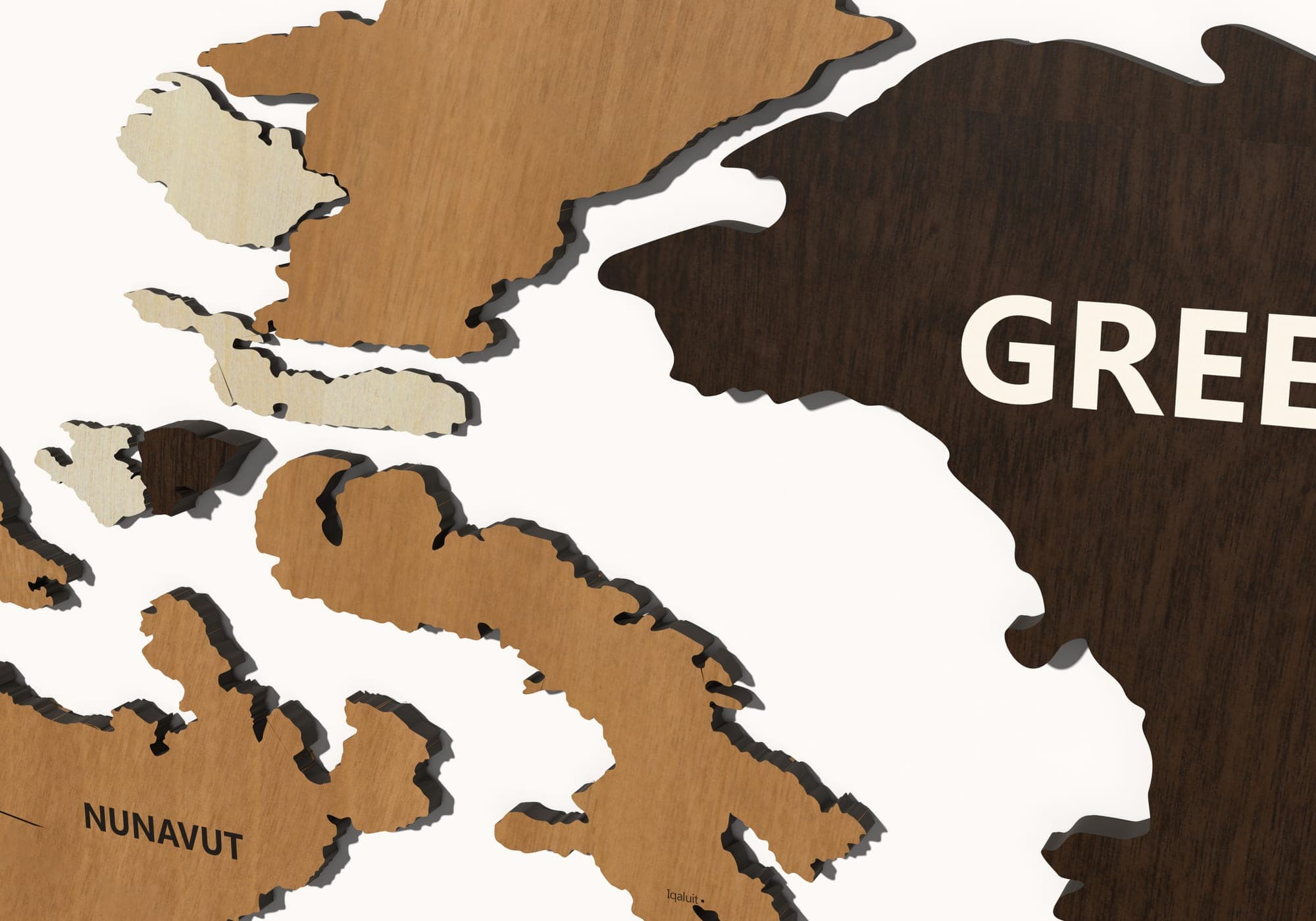
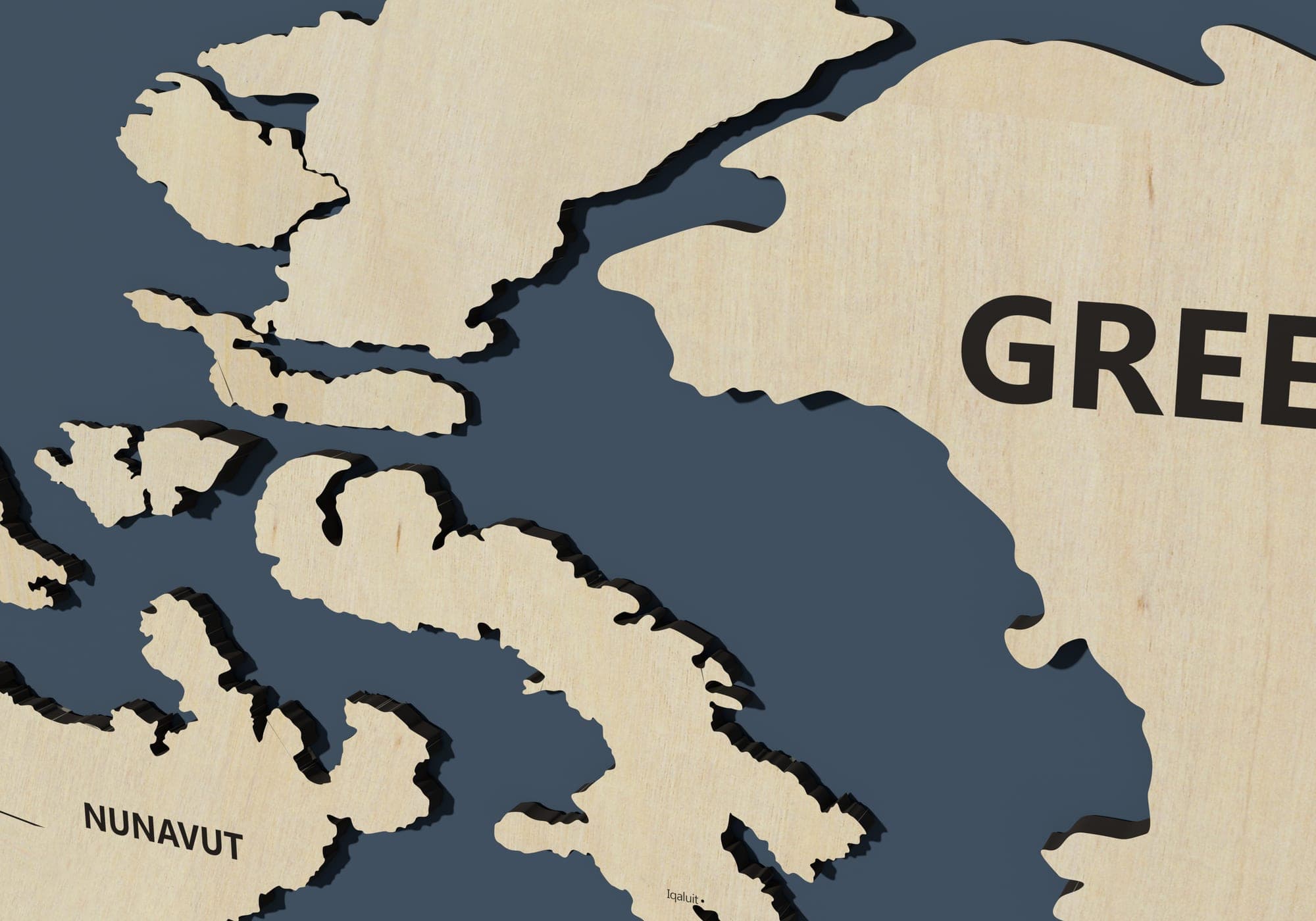
Laser cut to 0.01 mm — a hundredth of a millimetre. Bays, inlets and small islands are cut as they are, instead of being smoothed into shapes that are easier to produce. The smallest islands are not cut, because they would not survive as pieces.
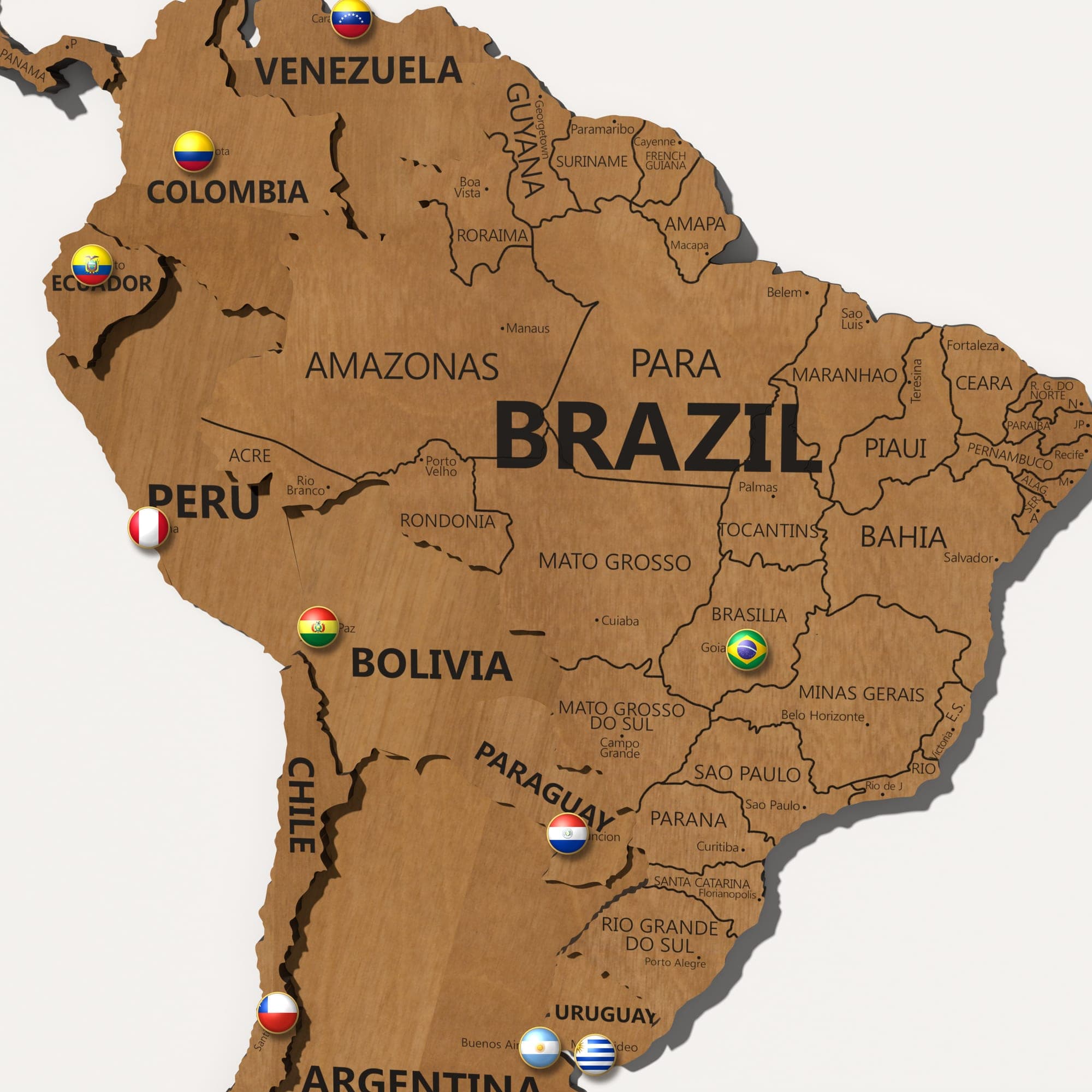
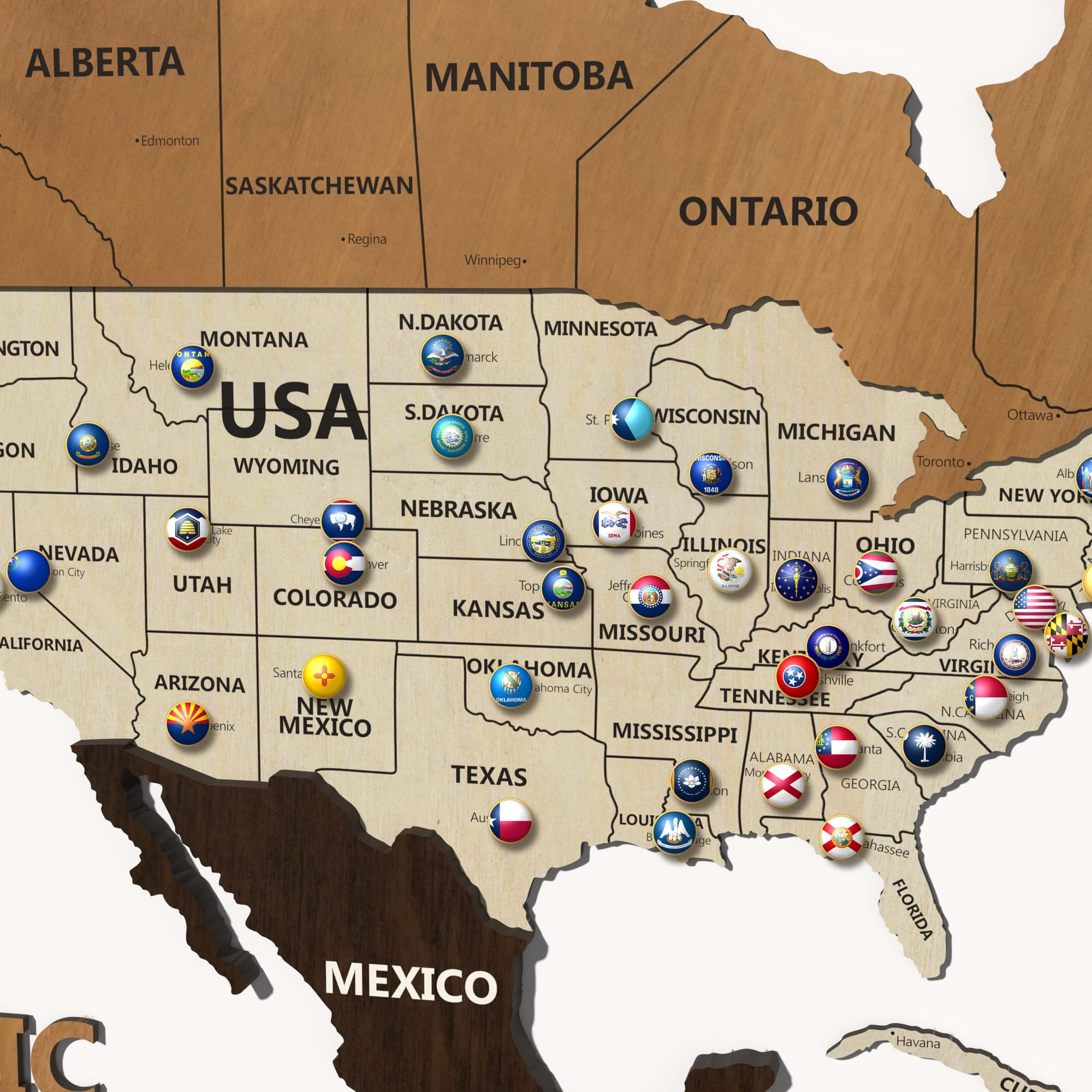
Countries, states and capital cities are UV printed straight onto the surface — not stickers, not engraving. The names go onto the grain itself — white on the dark woods, black on the pale — so the type stays fine enough to find the city you stayed in.
Every edge is finished by hand after cutting.
We build them to order. Nothing is stocked, nothing is mass produced, and no two maps are exactly alike — because no two sheets of wood are.
The back of every piece carries adhesive across its whole face, not a few small pieces of tape at the corners and edges. That is what pulls each piece flat to the wall and holds it there. There is no frame and no glass — each continent mounts flat to the wall on its own, so the map takes the shape of your wall instead of a rectangle.
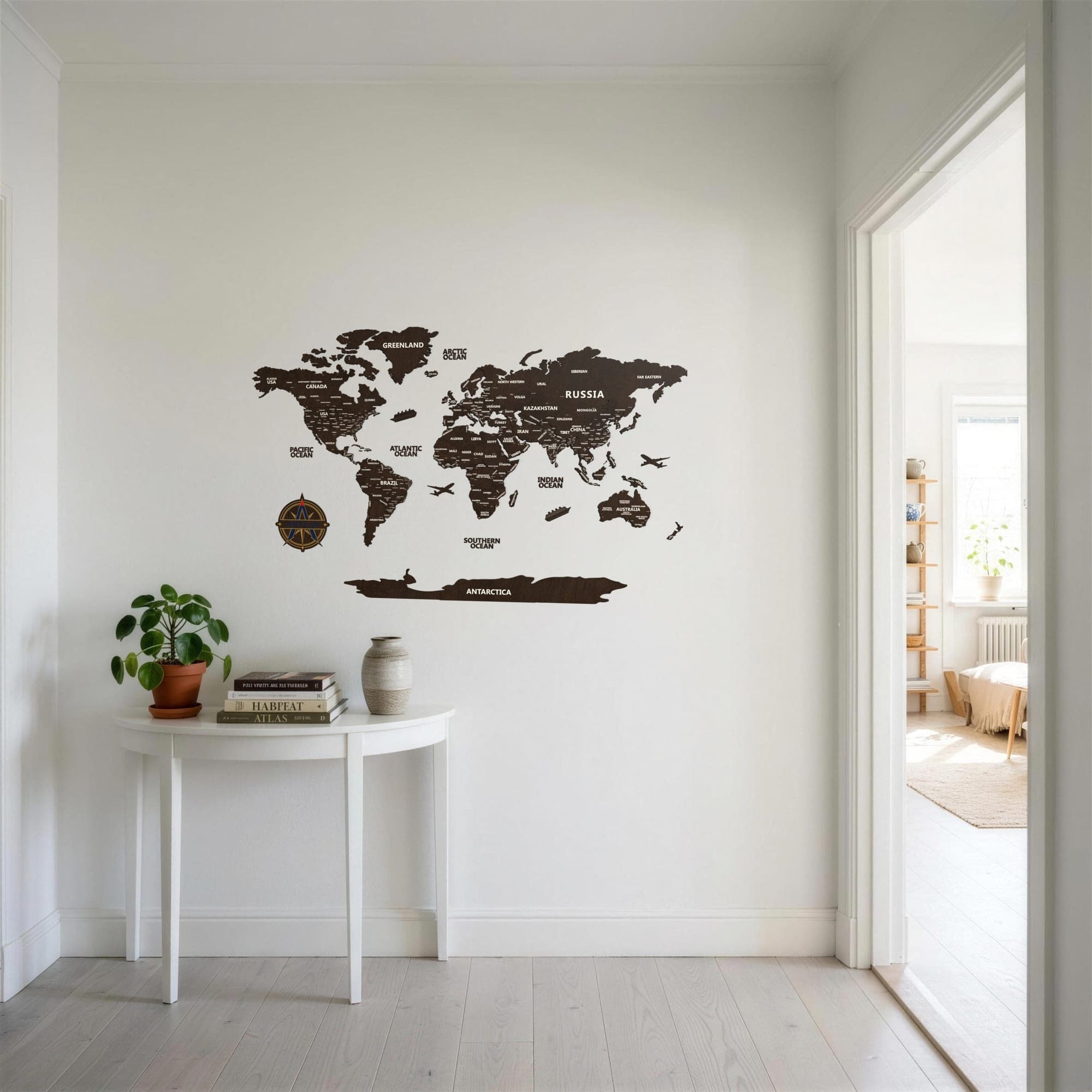
The map ships flat, in one rigid box, with every cut piece, the jigs, the compass, the mounting tape and the printed assembly guide inside.
The adhesive is single use. Installing it is a one-time job. We say this before the order, not after.